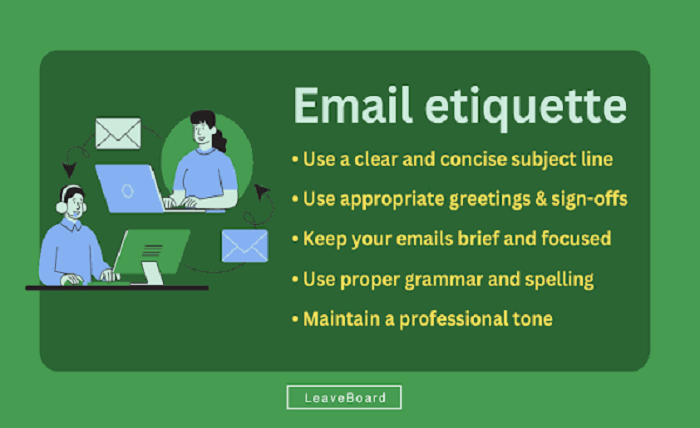
In the current digital landscape, email remains the cornerstone of professional communication. However, the convenience of instant messaging has often led to a decline in formal structure and clarity. Adopting strong email etiquette is not just about being polite; it is a critical skill that reflects your professionalism and attention to detail. Understanding proper email etiquette can significantly impact how colleagues, clients, and superiors perceive you. Without effective email etiquette, important messages can be misunderstood, ignored, or even cause unintended offense. This guide aims to reset the standard for professional correspondence by focusing on key areas of email etiquette. Whether you are a new intern or a seasoned executive, refining your email etiquette will enhance your communication efficiency. Good email etiquette saves time, reduces confusion, and builds stronger professional relationships. Let us explore the core components of effective email etiquette to help you write with confidence and clarity.
The Blueprint: Subject Lines and Salutations
The subject line is the first impression of your email, and proper email etiquette dictates that it must be clear and compelling. A vague subject line like “Hi” or “Meeting” is a prime violation of email etiquette, as it forces the recipient to guess the content’s priority. Effective email etiquette suggests using keywords that summarize the action required, such as “Q3 Budget Approval Needed by Friday.” This clarity is a fundamental aspect of email etiquette that respects the recipient’s time.
Following the subject line, the salutation sets the tone. In professional email etiquette, “Hi [Name]” or “Hello [Name]” are generally safe standards. Email etiquette becomes more formal when addressing external clients or senior executives, where “Dear [Name]” is often preferred. Ignoring the name entirely is poor email etiquette, as personalization shows effort and respect. Good email etiquette also involves matching the formality of your greeting to the relationship you have with the recipient. Remember, email etiquette requires that you never assume informality unless it has been established in previous communications.
Striking the Right Tone and Keeping it Concise
Tone is notoriously difficult to convey in text, making it a central focus of good email etiquette. Without vocal cues, your message might come across as abrupt or harsh. Practicing strong email etiquette involves reading your email aloud to gauge the emotional impact of your words. Positive phrasing is a key element of effective email etiquette; for example, “I will have that report ready by 3 PM” is better than “I can’t get it to you until 3 PM.”
Conciseness is another pillar of efficient email etiquette. Professionals often receive hundreds of emails daily, so email etiquette demands that you get to the point quickly. Long-winded narratives test the patience of the reader and are a failure of modern email etiquette. Good email etiquette involves using bullet points to break down complex information, making it skimmable. If your email requires a lot of background, strong email etiquette suggests summarizing the key ask in the very first sentence. Ultimately, respecting the recipient’s time is the ultimate expression of professional email etiquette.
The Golden Rule: Grammar and Proofreading
Nothing undermines your credibility faster than a typo or grammatical error; hence, proofreading is non-negotiable in email etiquette. Errors in spelling and syntax reflect a lack of care, which directly contradicts the principles of professional email etiquette. Utilizing spell-check tools is a basic step in email etiquette, but it is not foolproof. Due to autocorrect errors, manual proofreading remains a vital component of email etiquette.
Proper email etiquette also involves paying attention to capitalization; writing in all caps is generally considered shouting and is a severe breach of email etiquette. Conversely, using all lowercase in a professional setting can appear lazy or indifferent. Consistent email etiquette involves using proper punctuation to ensure your message is easily understood. Before hitting send, review your email for clarity; this is the moment where you practice rigorous email etiquette. A well-edited email demonstrates professionalism and intelligence, which are the hallmarks of excellent email etiquette.
Mastering the “Reply All” and CC/BCC Fields
Understanding the distribution fields is a crucial technical aspect of email etiquette. The “CC” (Carbon Copy) field should be used sparingly for stakeholders who need to stay informed but are not required to act. Conversely, “BCC” (Blind Carbon Copy) is a sensitive tool in email etiquette used to protect the privacy of recipients’ email addresses. Misusing “Reply All” is one of the most common violations of modern email etiquette, often cluttering inboxes with irrelevant responses.
Adhering to good email etiquette requires assessing whether everyone on the chain truly needs to see your response. If your reply is only relevant to the sender, following email etiquette means using “Reply” instead. Proper email etiquette also dictates that you should never use BCC to secretly loop someone into a conversation without the primary recipient’s knowledge, as this can damage trust. Transparency is a core value of strong email etiquette. Mastering these fields will ensure your email etiquette is both respectful and efficient.
Managing Attachments and Automatic Replies
Files and attachments must be handled with care to maintain good email etiquette. Always mention the attachment in the body of the email; failing to do so is a lapse in email etiquette. Proper email etiquette also suggests checking the file size before sending; large files can crash inboxes, which is a significant error in email etiquette. If the file is too large, good email etiquette requires using a cloud-sharing link instead.
The “Out of Office” automatic reply is another important aspect of email etiquette. Informing contacts that you are unavailable is mandatory professional email etiquette. A well-crafted auto-reply is part of overall email etiquette, as it manages expectations and provides an alternative contact for urgent matters. When setting up your away message, ensure it adheres to standard email etiquette by including the date of your return. Proper management of these automated responses ensures that your email etiquette remains intact even when you are not physically present to reply manually.
Response Time and Acknowledgment
Timeliness is a vital component of email etiquette. While instant replies are often appreciated, a well-thought-out response is better than a rushed one; however, leaving an email unread for days is poor email etiquette. Most professionals consider a response within 24 hours to be the standard benchmark for acceptable email etiquette. If you need more time to gather information, good email etiquette requires you to send a brief acknowledgment.
A simple “Got it, I will review and get back to you” is a perfect application of email etiquette in this scenario. This helps manage expectations and is a polite practice of email etiquette. Ignoring messages that require complex answers is a common mistake, but good email etiquette involves communicating the delay. Acknowledging receipt is a small courtesy that significantly impacts how your communication style is perceived. Following this rule is an easy way to elevate your email etiquette to a professional standard.
Electronic Signatures: The Professional Closer
Signing off your email correctly is the final act of good email etiquette. Your signature block is a crucial component of your email etiquette, acting as your virtual business card. At a minimum, proper email etiquette requires including your full name, title, and a phone number. Including a professional email signature is a simple way to provide necessary context to the recipient.
The closing line of the email body itself is also a reflection of your email etiquette. “Best regards” or “Sincerely” are standard choices in traditional email etiquette, though “Thanks” is acceptable when asking for something. Your choice of closing should align with the tone of the email body, ensuring that your email etiquette remains consistent. This final touch leaves a lasting impression and is as important as the salutation in professional email etiquette.
Conclusion
Mastering email etiquette is an ongoing process that evolves with workplace culture. While the landscape of communication changes, the core principles of respect, clarity, and efficiency remain constant. By implementing these strategies, you will not only prevent miscommunications but also establish yourself as a professional who values organization and interpersonal harmony. Strong email etiquette is not about being stuffy; it is about making life easier for everyone involved. Remember, every email you send is a reflection of your personal brand. Prioritizing email etiquette will inevitably lead to better business outcomes and stronger professional relationships.
FAQs
1. When is it acceptable to use emojis in professional emails?
Proper email etiquette generally discourages emojis in initial or formal communications. However, if the workplace culture is casual and you have an established relationship with the recipient, a simple smiley face may be used to soften a tone. Always err on the side of caution; if unsure, avoid them.
2. How long should an email be to maintain good etiquette?
Effective email etiquette suggests that an email should be as short as possible while still conveying all necessary information. Usually, five sentences or less is ideal for day-to-day communication. If you are writing more than a few paragraphs, consider if a phone call or document attachment would be more appropriate.
3. Is it rude to “reply all” when you’re giving a compliment?
Yes. Applying good email etiquette means avoiding “Reply All” unless you are absolutely certain that everyone on the list needs to see the specific details of your response. Compliments or “Thanks” should generally go directly to the sender.
4. What is the best way to follow up if someone ignores my email?
Professional email etiquette suggests waiting 48 to 72 hours before following up. In your second email, reply to the original thread to provide context, and gently ask if the recipient has had a chance to review your previous request. Always keep the tone polite and understanding.
5. How can I fix a tone problem in an email before sending it?
As part of your proofreading process, read the email aloud. If it sounds accusatory or harsh, rephrase it. Using “we” or “I” language (e.g., “I suggest we try…”) rather than “you” (e.g., “You need to…”) is a core practice of email etiquette to defuse tension.